
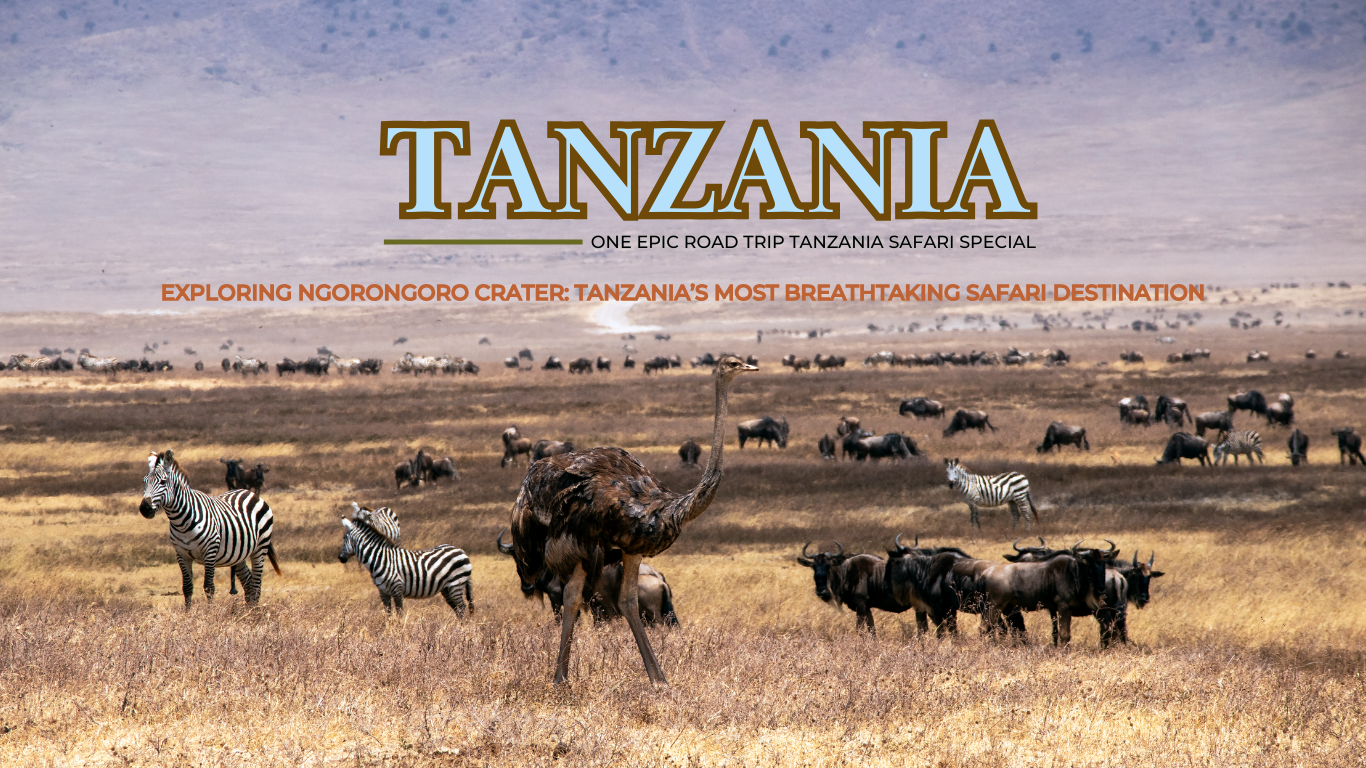

Tucked away in the northern part of Tanzania, just west of the city of Arusha, lies the UNESCO World Heritage Site of Ngorongoro Crater Conservation Area. Often referred to as the “Eighth Wonder of the World”, and honestly, once you’ve visited, it isn’t hard to see why.
This incredible natural landscape was formed nearly two to three million years ago, when a gigantic volcano, believed to have been even larger than Mount Kilimanjaro, collapsed in on itself after a colossal eruption. The result was the vast bowl-shaped caldera we see today.
Over the centuries, Mother Nature slowly reclaimed the area. Rainwater filled the swamps and lakes, while the fertile red volcanic soil allowed lush greenery to flourish. What was once barren land gradually transformed into open grasslands, forests, and thriving ecosystems that mesmerises many visitors every year.
Today, the crater is home to over 30,000 animals.
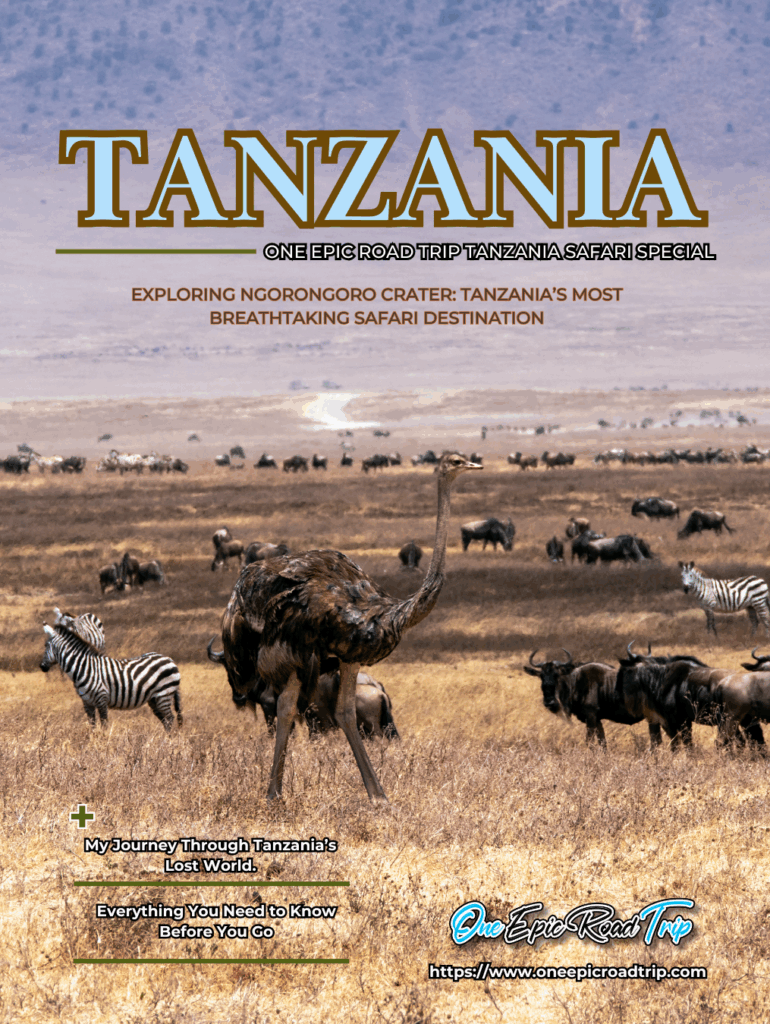
You’ll find grazing animals such as wildebeest, zebras, gazelles, buffalo and majestic elephants, and if you’re lucky, you may even catch a glimpse of the elusive black rhino.
Around the lakes and swamps, you’ll spot flamingos, pelicans and hippopotamuses, while predators including lions, spotted hyenas, vultures, African wild dogs, cheetahs and leopards all play their part in maintaining the crater’s delicate ecosystem, one that thrives all year round.
Entering the Ngorongoro Crater
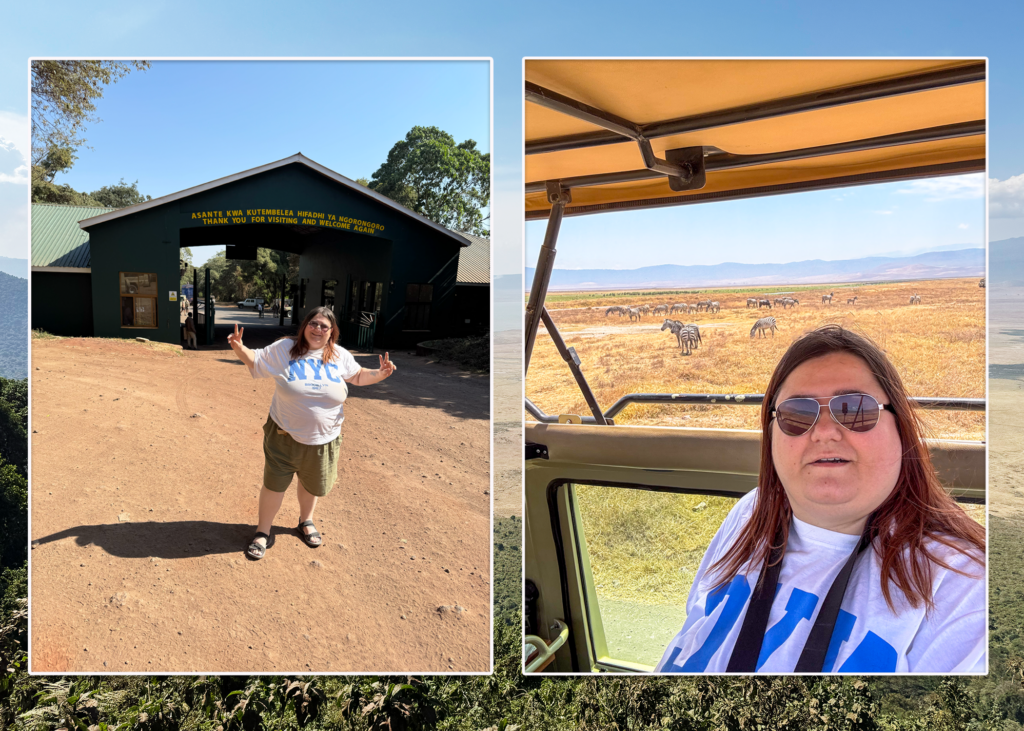
My driver, Omari, and I arrived at the Lodoare Entrance Gate of Ngorongoro Crater at around 8:00 am. While I waited in our safari jeep for him to get our paperwork stamped and the park fees paid, I noticed we were surrounded by tall, dark green trees.
Once Omari returned, we began our ascent up the crater.
I’ll be honest, I had no idea what to expect. I deliberately chose not to research any of the safari parks beforehand, because I wanted the experience to feel completely new and authentic, especially because I wanted to write the experience from my point of view and not another content creators.
As we climbed higher, on the passenger side there was a misty mini forest. Even through the fog you could clearly see where elephants had passed through, because of the broken branches, flattened paths and the occasional movement in the trees where monkeys were playing.
Once we passed the forest, the road became very dusty, with clouds of dust from the volcanic soil being kicked up by the other jeeps and the delivery trucks heading down to the crater to supply the luxury lodges on the crater rim.
My advice? Keep the windows closed while ascending, unless you want to end up covered in dust and when you pose for a photo by the jeep, don’t lean on it, especially when wearing a white t-shirt like I wore that left one side of me red.
But I am gonna be real with you here, the dust wasn’t what made the road feel sketchy, it was the terrain. The roads are far from smooth and incredibly bumpy to the point I was taking off out of my seat and I am a big girl so someone smaller is gonna go higher. I was genuinely glad to have my seatbelt on because there were moments where I was holding on for dear life. Some sections were narrow enough to make your heart skip a beat.
Honestly, the guides and truck drivers who navigate these roads daily are incredibly skilled, because I personally wouldn’t drive it.
The First Viewpoint
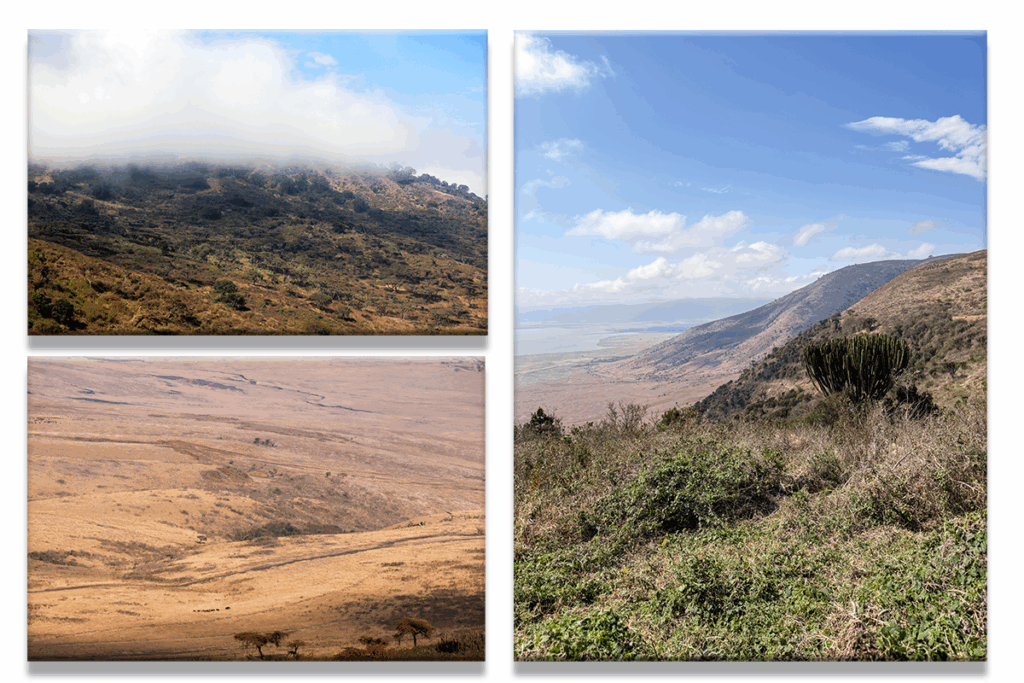
When we reached our first viewpoint, the mist slowly cleared and the sun began to shine through.
To my left, I could see a Maasai village, with a villager herding cows, goats and donkeys.
We were then greeted by three Maasai men who insisted I have my photo taken with them. My guide Omari, who was honestly the best guide I could have asked for, quickly warned me that this wasn’t free and would involve a tip.
I was fine with that, but my lesson learned was to keep some small cash in your pocket.
As I walked back to the jeep to grab my purse, they followed me. I gave them £10, which is roughly 32,000 Tanzanian shillings or about $13.50 USD.
Unfortunately, because they saw I had more notes in my purse, they tried to ask for more. Luckily, Omari stepped in immediately and firmly said “No. She paid, and that’s it.” They accepted that and moved on to the next tourists.
They were a little pushy, but I understand why, the money is shared within the village, and many locals assume tourists are wealthy.
It probably didn’t help that I was the only passenger in the jeep, which may have given off slight “princess on safari” vibes. Although I have to say a very unglamorous princess, because apparently being 600 metres (2,000 feet) above sea level does strange things to a girl’s hair. Ladies, take it from me, bring anti-frizz products. My normally straight hair turned super frizzy.
Meanwhile, to the right of the jeep was a breathtaking bird’s-eye view of the Ngorongoro Crater, stretching out like a giant natural amphitheatre. For a moment I half expected someone to say, “Welcome to Jumanji or Jurassic Park.” It truly looked untouched by time and mesmerising.
Descending into the Crater and First Sightings
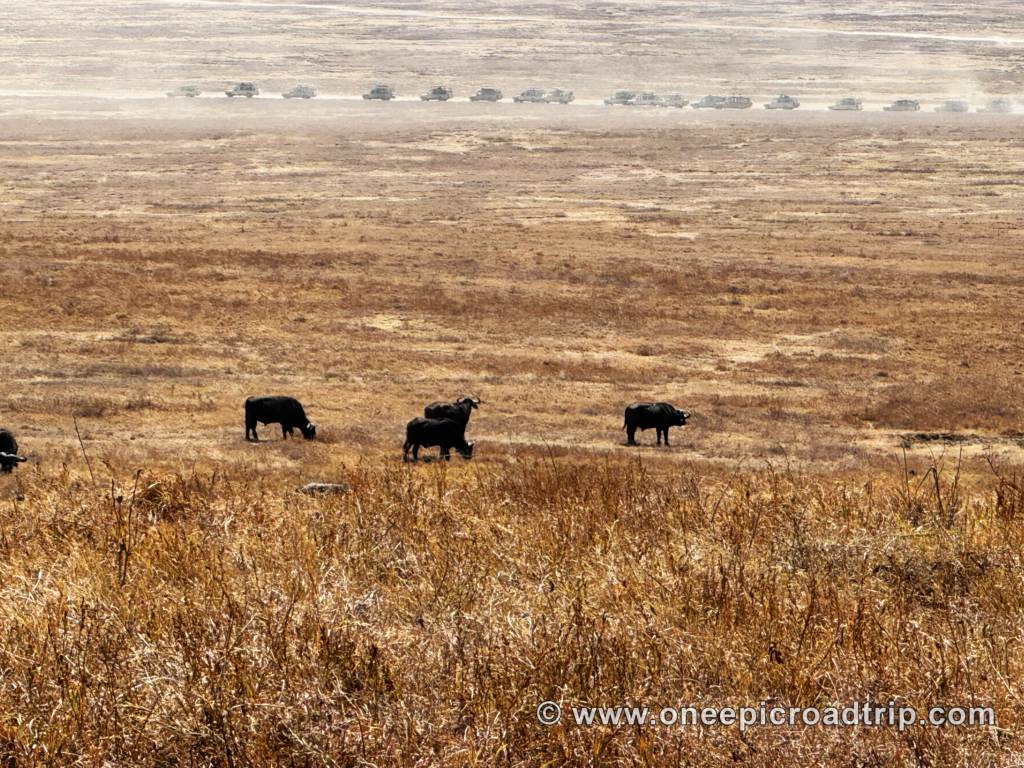
As we descended onto the crater floor, I noticed that the land looked slightly drier due to us being in the dry season, though still ok enough for herds of Cape buffalo to graze.
Omari explained something interesting about the buffalo. You’ll often see two herds close together.
The way he explained it is, one herd consists of what he called the “retired male generals” older males no longer part of the main breeding group. They stay nearby with other older males but keep close to the main herd of females, calves and younger males.
This is strategic and actually helps with protection against predators like lions to and extent as there is strength in numbers.
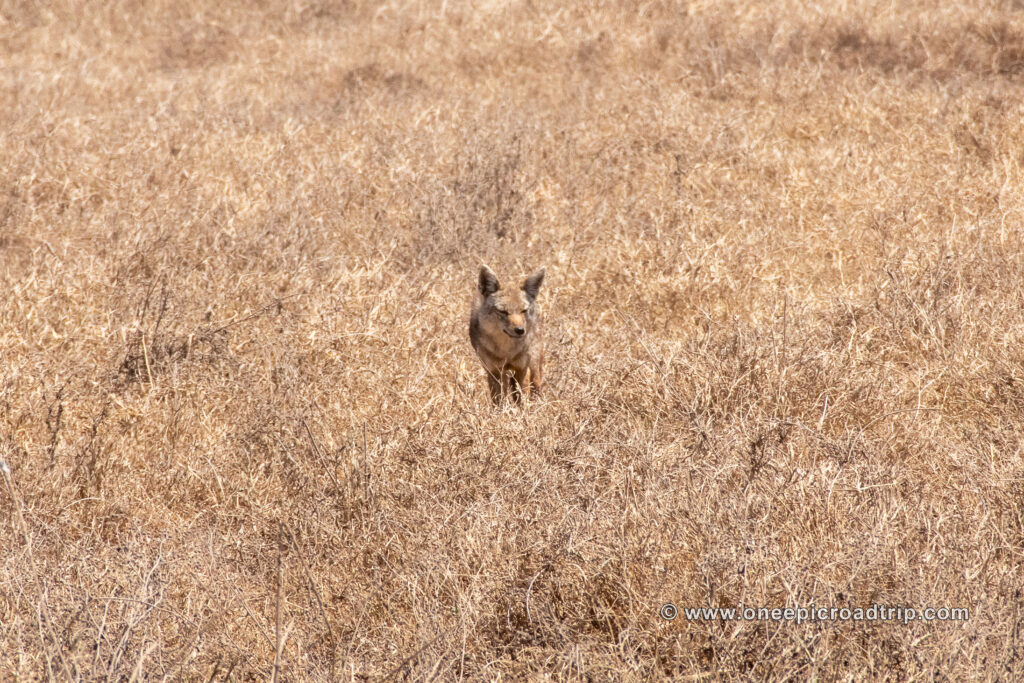
Further along, we spotted what we thought was a small jackal but a friend of mine suggested it could be an African Golden Wolf. We watched it hunting in the tall dry grass, slowly stalking its prey. We watched it for nearly ten minutes as it crept closer till it pounced on a bird.
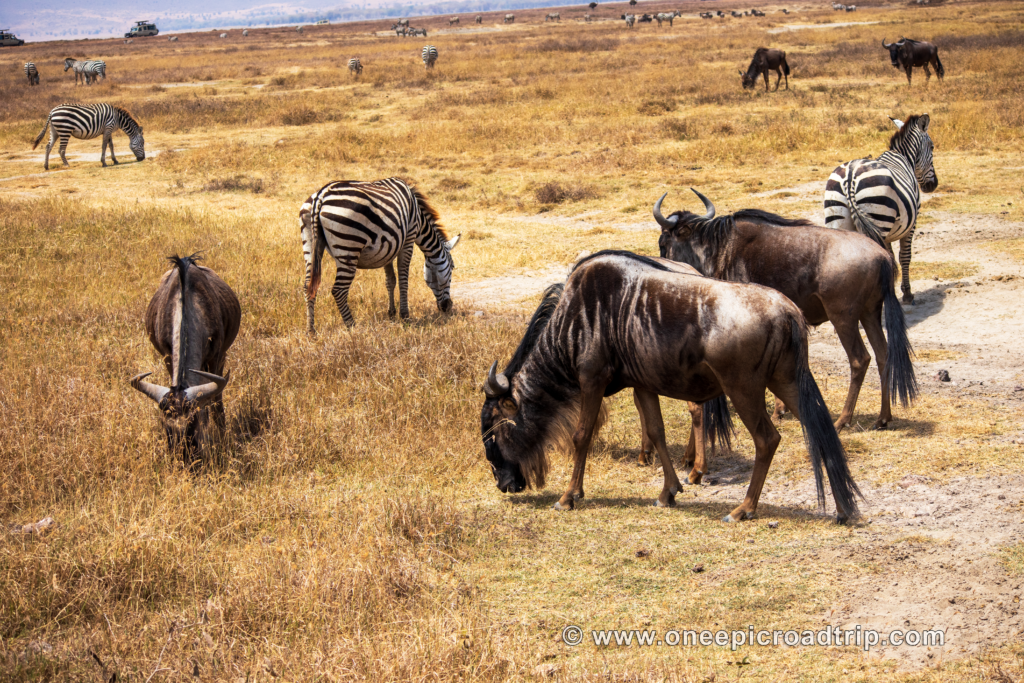
Soon after, zebras and wildebeest covered the plains and crossed the road together, grazing side by side.
Here’s a fun fact: Tanzania is home to two main species of wildebeest.
• Blue wildebeest – commonly found in Ngorongoro and the Serengeti
• Black wildebeest – found mainly in Tarangire National Park
There’s a third type of wildebeest which is a hybrid, created when the two species interbreed.
Bird spotting in Lake Magadi
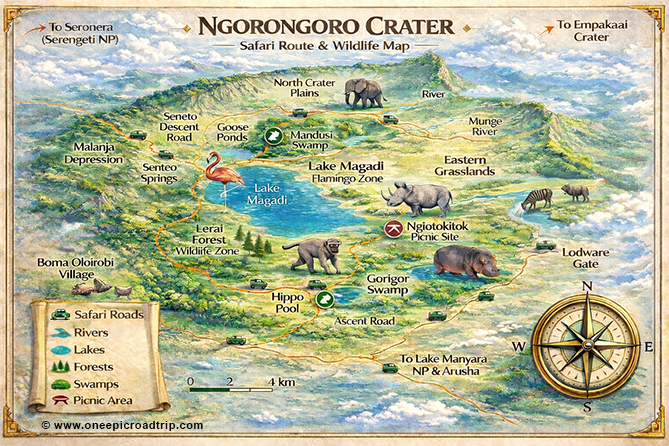
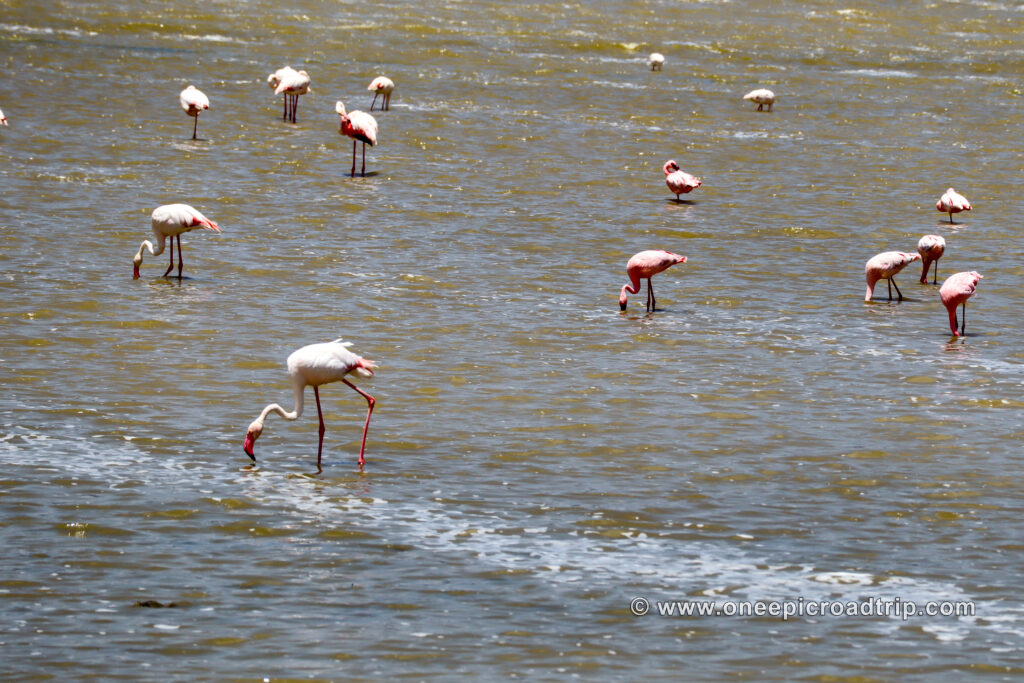
We then made our way towards the wetlands, arriving at Lake Magadi, the largest lake inside the crater.
Lake Magadi is an alkaline soda lake, rich in salt and minerals that promote the growth of algae, the perfect food source for many bird species that reside within the crater.
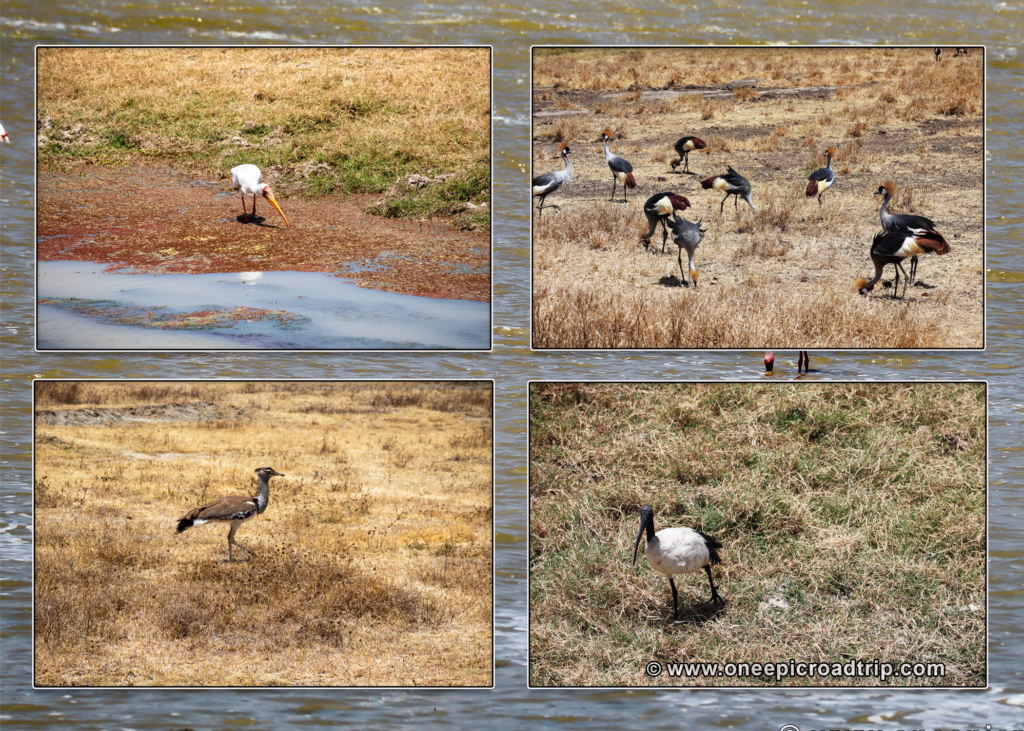
Even if you’re not a birdwatcher, you can expect to see incredible flocks of:
- Flamingos
- Pelicans
- Egyptian geese
- Grey crowned cranes
- Yellow-billed storks
- Many other water birds
Omari was brilliant at finding quiet spots away from the crowds, which meant we could enjoy the scenery without dozens of other safari vehicles nearby.
One of the best parts of being in a safari jeep is that the roof lifts up, allowing you to stand and get a better view of everything around you. I stood up with my camera, snapping photos and filming bits of video, but after a while I put the camera down and just took a moment to take it all in.
Watching flamingos take off and land is strangely mesmerising there’s something incredibly elegant about it.
Lunch with Hippos at Ngoitokitok Springs
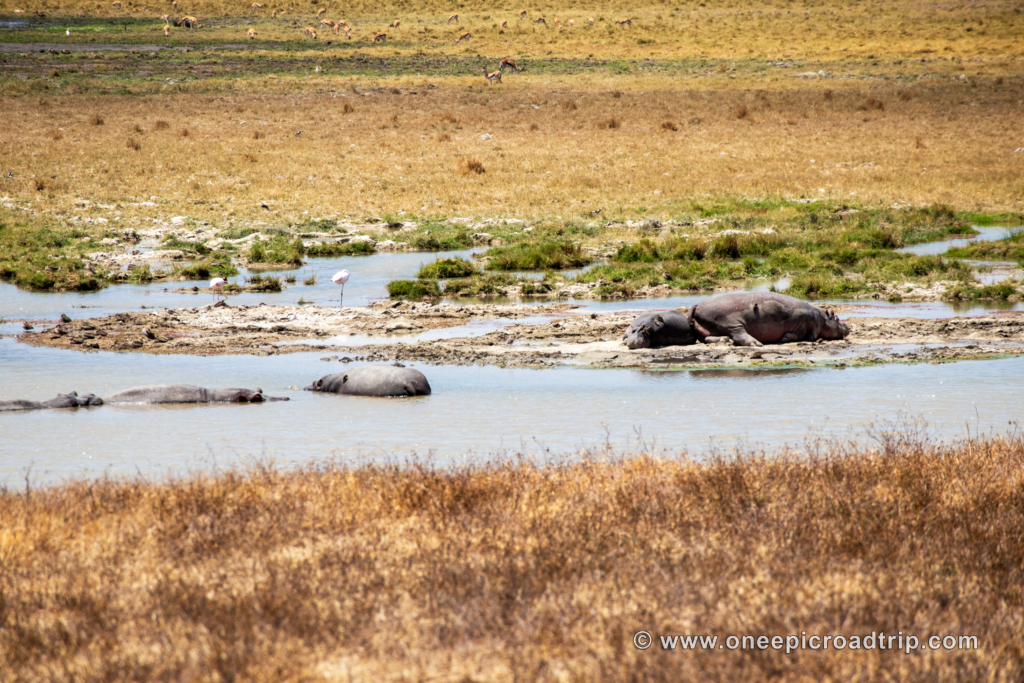
Believe it or not, time moves quickly on safari. Between stopping for photos, watching wildlife and driving across the crater floor, the morning seemed to fly by. Before we knew it, it was time for lunch. Having left the lodge early that morning, both Omari and I were definitely starting to feel hungry, so we headed towards the designated picnic area at Ngoitokitok Springs.
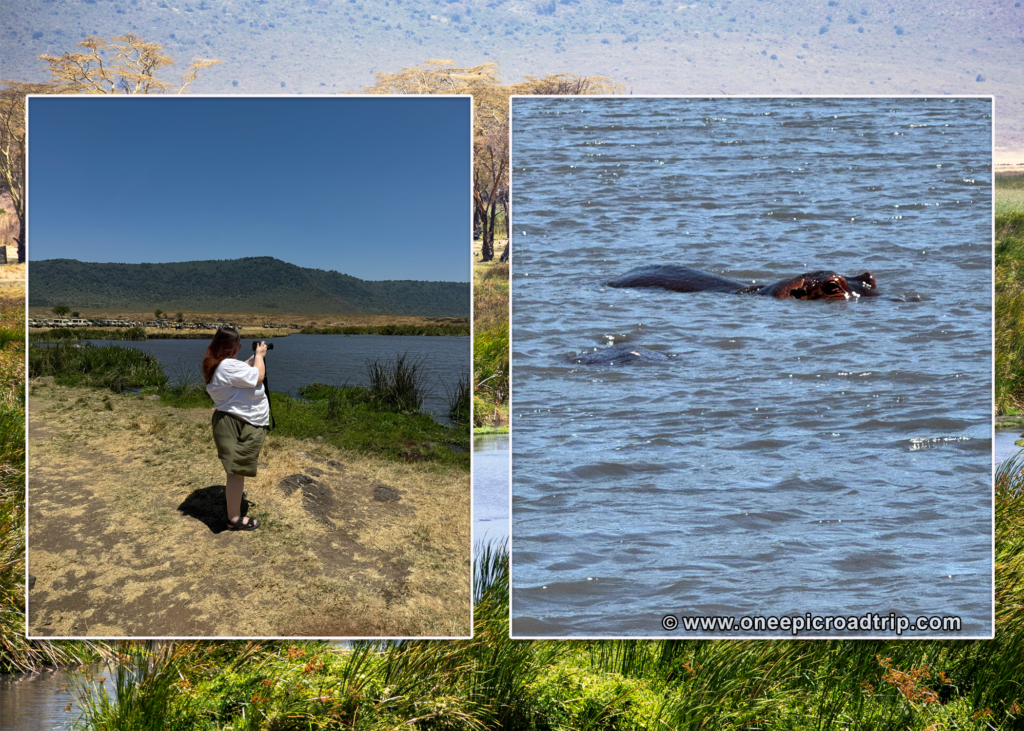
The picnic site sits beside a large tree and several picnic tables, right next to the springs themselves. As we pulled up, I immediately spotted at least four hippos splashing and bobbing in the water, occasionally lifting their heads above the surface before disappearing again.
The area was incredibly busy and every picnic table was taken, so Omari and I decided to have our lunch in the jeep with the doors open, which actually worked out quite nicely as it meant we could enjoy the fresh air and people watch whilst we ate. It was also quite entertaining watching some of the monkeys and birds lurking nearby, clearly waiting for the perfect opportunity to steal food from an unsuspecting safari visitors.
Our lunch had been prepared by African Safari Karatu Lodge where I was staying. The meal included a sandwich, fruit, crisps, cake, yoghurt, biscuits and a drink simple, but exactly what you want after a busy morning on safari.
Once we finished eating, we climbed out of the jeep and walked over to the springs to get a closer look at the hippos and take a few photos.
What struck me most about the whole experience was how surreal it felt. There was no fence separating us from the hippos, and while hippos can be incredibly territorial animals, they seemed completely unfazed by the tourists nearby taking photos and eating lunch. They simply carried on with their day, splashing, snorting and occasionally surfacing while around a hundred people stood on the banks watching them.
It was one of those moments where you suddenly realise just how unique the whole safari experience really is.
Spotting Lions
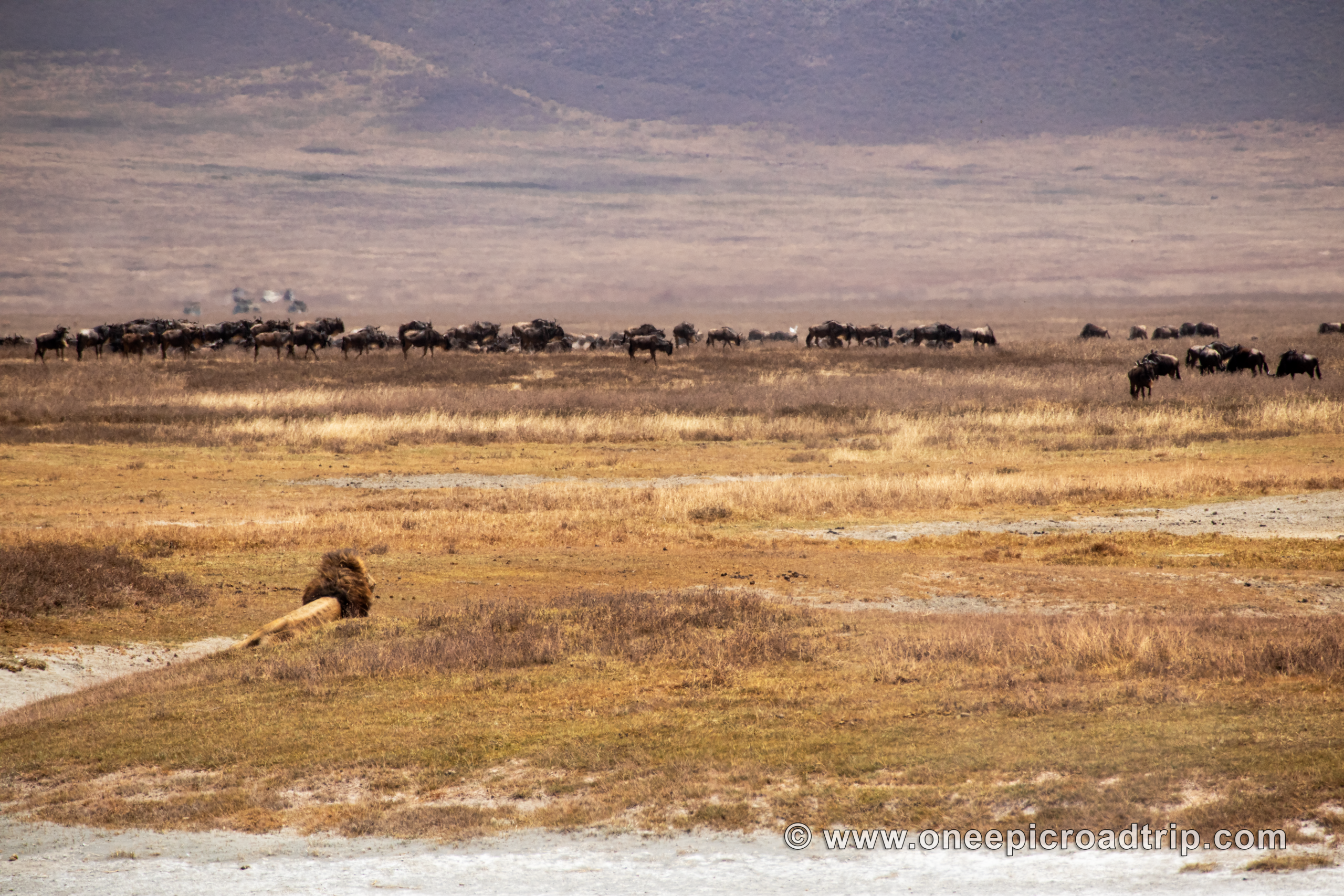
After lunch we headed off in search of more wildlife and as the afternoon heat built up, I began to wonder whether we’d actually see any lions. Then, about 10 minutes after leaving the picnic area, we spotted them.
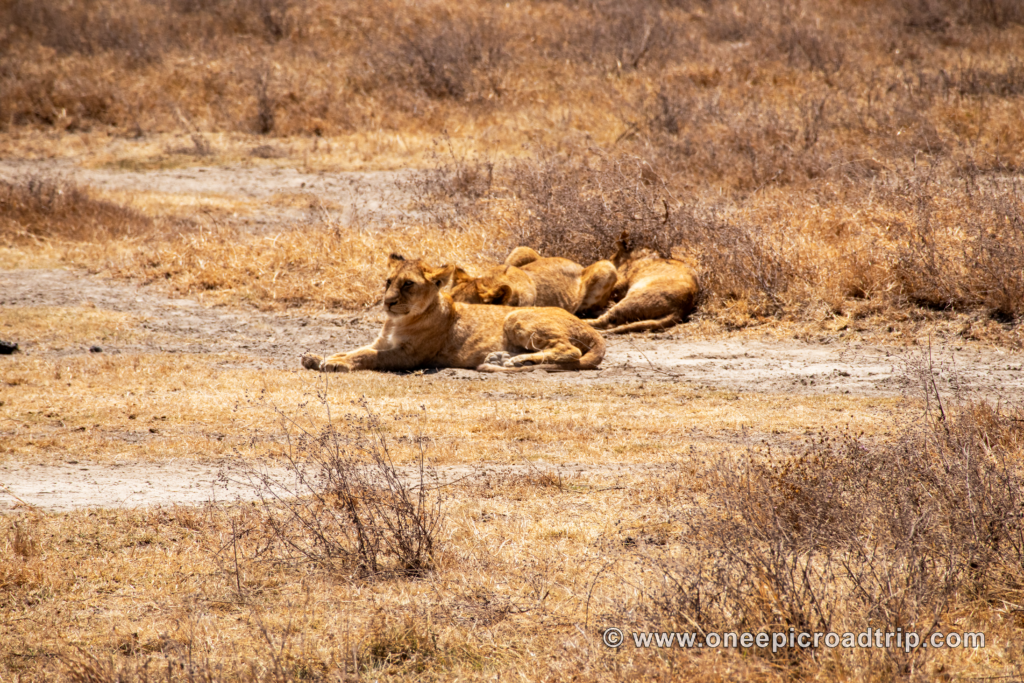
Two young male lions were stalking prey in the distance, just a little further away a lioness and her cubs were relaxing in the sun. Our jeep stopped at a respectful distance while we watched.
Elephants
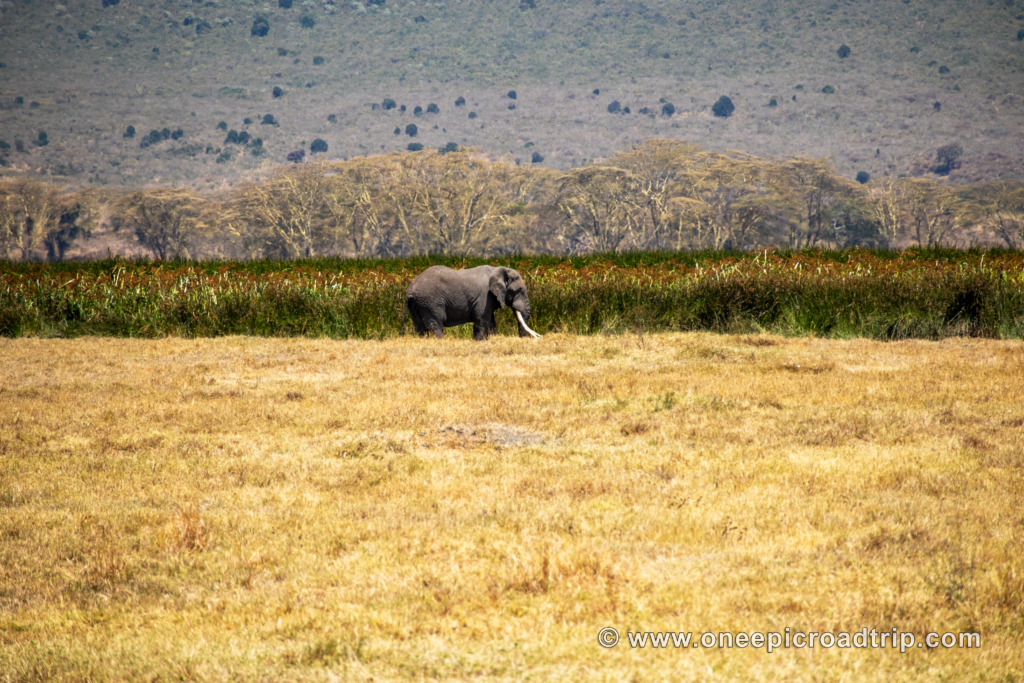
There were plenty of signs that elephants had been in the area, but during the day we only spotted one lone elephant. Omari explained that this was likely an older bull on the final stage of his life, probably pushed out of the herd by a younger, stronger male.
Seeing just one elephant didn’t bother me though, as I knew there would be more opportunities to see them later in my trip.
Most elephants in the crater tend to stay around Lerai Forest, where there is plenty of shade and vegetation. If you’re lucky, you might also catch a glimpse of black rhinos or baboons in this area.
What You Won’t Find in Ngorongoro Crater
Interestingly, there are two animals you won’t find on the crater floor.
The first is giraffes. The crater walls are simply too steep for them to safely descend.
The second is Nile crocodiles. While crocodiles exist around the crater rim, they do not live in Lake Magadi because the lake’s high alkaline content makes it unsuitable for them.
Best Time to Visit Ngorongoro Crater
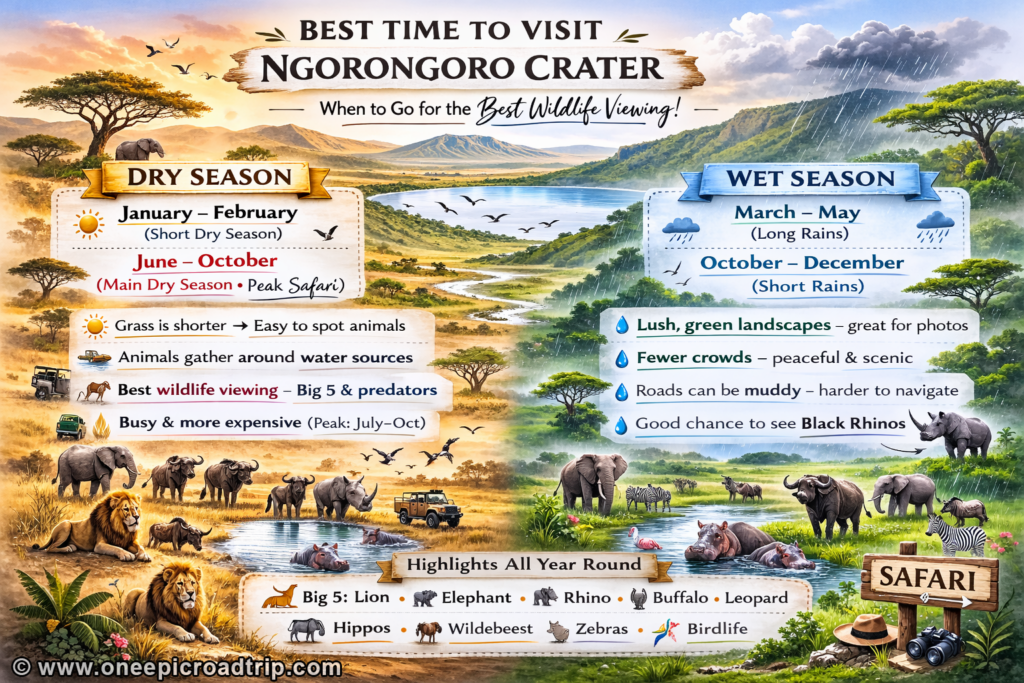
Unlike many Tanzanian reserves, Ngorongoro is a year-round safari destination because the ecosystem is self-sustaining. Most of its wildlife remains inside the crater throughout the year.
Dry Season
January–February is a short dry season and tends to be slightly quieter.
The main dry season runs from June to October, which is when I visited. This is peak season, which is more busier and pricey.
During this time the grass is shorter and animals gather around water sources, making wildlife easier to spot. However, this is also the busiest time for safaris.
Wet Season
The long rainy season occurs March to May, with shorter rains between October and December.
Just be aware that the roads can become muddy making the terrain harder to navigate in vehicles, but the scenery is incredibly lush and green, which photographers love.
Interestingly, black rhinos can sometimes be easier to spot during greener months.
How Crowded Is Ngorongoro Crater?
Ngorongoro Crater is smaller than many Tanzanian reserves, and because it is one of the most famous safari destinations in the world, it can feel crowded particularly around the dry season.
However, visitor numbers are strictly limited to protect the ecosystem, wildlife and to ensure a better visitor experience that’s not overcrowded
Access is permitted between 6am and 6pm, and there is no accommodation on the crater floor, ensuring every visitor experiences the same environment.
I was lucky because Omari purposely avoided the busiest areas, giving us a more relaxed experience.
How Many Days Should You Spend Here?
I spent one day in Ngorongoro Crater, which is enough for most visitors to see a wide range of wildlife. However, if your budget allows, two days would be ideal, in my personal opinion.
Other things to factor in is how far your journey to the Ngorongoro Crater is, you don’t want to be getting up at 3am to get your safari because you’ll peak before lunch and want to sleep. I stayed about an hour and a half away from the crater and booked my entire trip through Tempo Africa, who were excellent both in the office and on the ground, they catered the who itinerary to my needs.
Cost of Visiting Ngorongoro Crater
The Ngorongoro Crater, as I said previously, is the most expensive of the Tanzania safaris to visit. My fee was part of the package I paid with Tempo Africa, but having done my research online I wanted to give you a breakdown.
- Entry fee for Non-Citizen Adults: $70.80 USD per person (around £50–£60 GBP)
- Entry fee for Non-Citizen Children (5–15): $23.60 per person/day (around £18–£20 GBP)
- Under 5s go free
- Crater Service Fee: $295 per vehicle per trip (mandatory for driving on the crater floor) (around £230–£240 GBP)
- Concession Fee: ~$50+ per person/night if staying on the crater rim.
- Vehicle Fee: ~$177+ per day (varies by vehicle weight) (around £140 per day)
These are high costs, but they do cover conservation, and the salaries of park rangers who protect the land from poachers.
Please Note: Currency conversions are approximate and can fluctuate with exchange rates.
Is The Ngorongoro Crater Safari Safe?
As with everything, common sense should be used, especially when around wildlife, but you will be accompanied by an experienced guide and, depending on what you have booked, sometimes an armed ranger too, so either way you know you will be in safe hands.
These animals are wild, so you cannot pet them. Funny story, my jeep was next to another jeep with a large group in it, and one passengers actually asked if they could get out and pet the wildebeests and zebras. Bear in mind, we were also aware there were lions in the area. I think it was lucky that I was in my own jeep because both me and my driver looked at each other as if to say, did that person really just ask that? Luckily, they were told no, but just to stress the point, a safari is not a petting zoo.
Volcano-wise, yes, the Ngorongoro Crater was formed through volcanic activity, but most of the volcanoes in the area are dormant or extinct. I was told there is one active volcano nearby called Ol Doinyo Lengai, which means Mountain of God in the Maa language spoken by the Maasai people. It is considered a sacred spiritual site where their deity, Enkai, resides. It is also the only volcano in the world that erupts a unique, cool, black-coloured natrocarbonatite lava. This volcano is north of Ngorongoro Crater, and most eruptions are small and do not affect safaris in the area.
Crime is not a major issue, but if you are leaving the jeep at the picnic area, do not leave valuables on show, because you never know when an opportunist might strike.
Road safety is probably the main thing to be aware of. The roads are not the best and, as I mentioned before, descending into the crater had me holding on for dear life at times, so make sure you wear your seatbelt. I don’t know if this is just a Brit abroad thing, but some people seem to think seatbelts stop mattering the second they go on holiday. They do matter, and they are there to save your life. If you are plus size, it may be worth investing in a seatbelt extender before your trip.
Can You Do a Night Safari?
No, unfortunately not. Night drives are not permitted inside the crater, and all vehicles must leave by 6pm. However, other parks in Tanzania do offer night safaris.
Can You Stay Inside the Crater?
No, there is no accommodation inside the crater itself, but there are many lodges around the Ngorongoro Conservation Area, ranging from luxury lodges to campsites.
The Truth About Safaris
One important thing to remember is that wildlife sightings are never guaranteed. Animals move, hide, rest and hunt on their own schedules. The hotter it gets, the more animals retreat into shaded areas that may not be accessible by safari vehicles.
So go with patience and an open mind. Even if you don’t see every animal, the experience is still incredible, I for one plan on going back to Tanzania in the near future and spending a month there and will be going back to the Ngorongoro Crater.
What to Bring on a day Safari
Unless you’re a content creator travelling with loads of equipment, you really don’t need to overpack for a safari day trip. That said, there are a few essentials that I was really glad I had with me.
- First up, a reusable water bottle. Most safari jeeps have small fridges and will give out bottled water, but I was happy to have my Water-to-Go bottle with me as well.
- A portable power bank or charging cable is also a good idea. My jeep actually had charging ports, which was great, but I always carry a power bank just in case.
- If you’re planning on taking photos, then obviously bring a camera with the right lenses, spare batteries, memory cards and lens wipes, you’ll definitely need them with all the dust around.
- I’d also recommend bringing binoculars, as sometimes animals are further away and it’s nice to get a closer look without relying on the camera zoom.
- You’ll want sunglasses and a baseball cap, especially with the safari roof open, because the sun can be pretty strong.
- Speaking of sun, SPF 50 sunscreen is a must. Even if it doesn’t feel too hot, the sun coming through the roof and windows will catch you out.
- Another thing I was glad to have were wet wipes, because between the dusty roads and climbing in and out of the jeep, you will get dusty.
- Lip balm is another small thing that makes a big difference. The combination of dry air and dust can really dry out your lips.
- Ladies, take it from me, bring something for your hair. My normally straight hair turned unbelievably frizzy thanks to the altitude and dry air, so hair ties, a brush and some frizz control products are definitely worth packing.
- You’ll also want bug repellent, as both mosquitoes and tsetse flies are present in the Ngorongoro area.
- Try to wear neutral coloured clothing as well, as bright colours can attract insects and stand out more to wildlife.
- And finally this might sound obvious but bring some toilet roll or tissues. There are rest stops, but with so many people using them during the day it’s always better to have your own just in case.
Final Thoughts
A safari done properly with a reputable company is truly a bucket-list experience. I was lucky enough to have a private jeep, which meant I could move at my own pace, stop for photos and really soak up the atmosphere. Ngorongoro Crater was everything I hoped it would be and more.
If you’re travelling to Tanzania, this should absolutely be on your safari list. Its unique ecosystem, dramatic landscapes and incredible wildlife make it one of the most extraordinary safari destinations in Africa.

Wanna Experience Tanzania?
Join me in September 2026 for One Epic Group Tour to Tanzania

Looks amazing, Lisa. Can’t wait to go myself
What a wonderful experience! I tend to do quite a bit of research on sights I’ll visit, but love the idea of going in without research, simply enjoying the experience of seeing the crater for the 1st time.
Thank you for the wonderful memories. Having spent two months travelling through Africa, some years ago. The Ngorongoro Crater animal kingdom was such a highlight.